

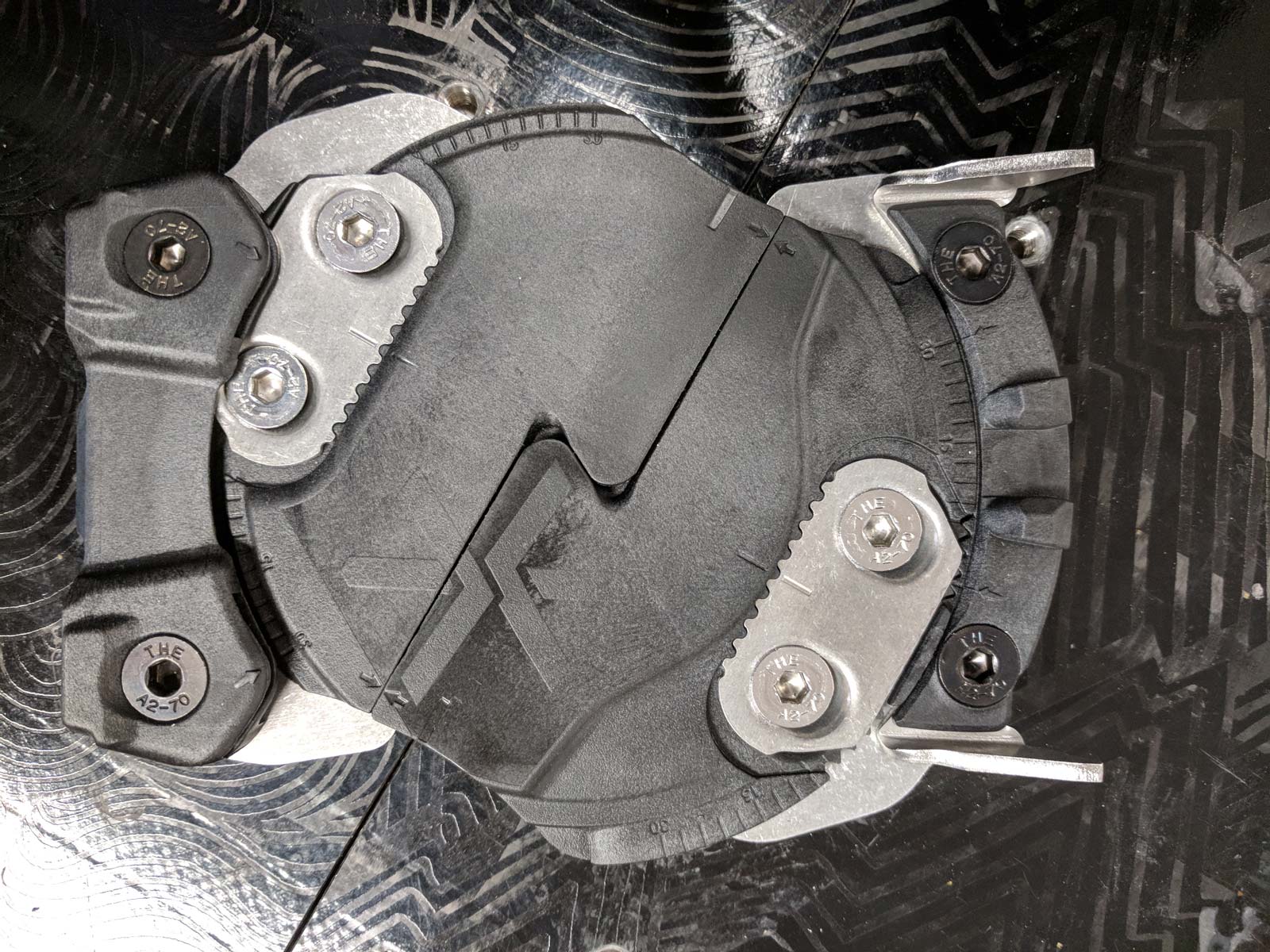
 For proper set up to the board the Ride Mode 2.0 has alignment arrows that will point at each other and seam alignment lines that line up with the seam of your board when properly aligned.
To reduce icing and ease snow clearing we looked at design options and new materials. The seam tabs of the Ride Mode 2.0 are designed to extend across the seam of the board while removing all sharp corners where snow can pack.
For proper set up to the board the Ride Mode 2.0 has alignment arrows that will point at each other and seam alignment lines that line up with the seam of your board when properly aligned.
To reduce icing and ease snow clearing we looked at design options and new materials. The seam tabs of the Ride Mode 2.0 are designed to extend across the seam of the board while removing all sharp corners where snow can pack.
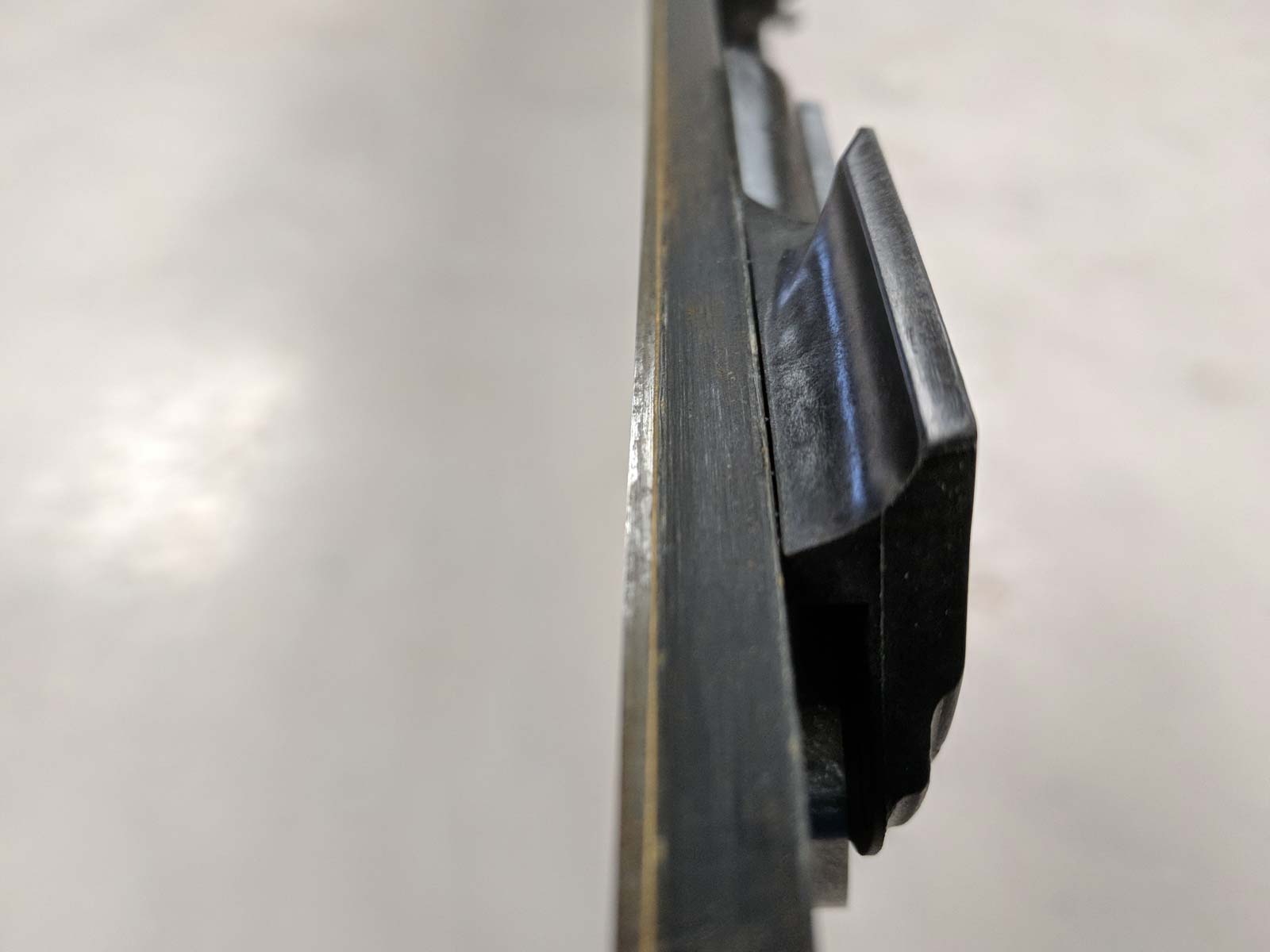 The seam tab sits flush to the seam and is contoured to match you finger for ease of snow clearing. In addition, as you slide the ride mode together the opposing seam tab scrapes any snow away with the snow ejection channels.
For material we've used a carbon infused nylon for most of the exposed components. The carbon infused nylon has a lower thermal conductivity (.25 W/mK) than Aluminum (205 W/mK). Materials of low thermal conductivity are better thermal insulators, so snow will not stick to them as easily.
The last update we did to achieve Drop-On Change Overs was to optimize the clearances between the Ride Mode 2.0 and the Prime Bindings. With the optimized clearances when you put a Prime Binding onto the Ride Mode 2.0, the binding is very loose prior to closing the Power Link Lever. Close the Power Link Lever and Active Joining pulls your splitboard together and keeps your binding spring-loaded to board, giving you direct power transfer to the edge and instant response in a way that passive slip fit splitboard systems cannot. What this means is if there happens to still be snow in the ride mode or around the ride mode when you put your binding on, you will always be able to lock the binding to the ride mode.
The seam tab sits flush to the seam and is contoured to match you finger for ease of snow clearing. In addition, as you slide the ride mode together the opposing seam tab scrapes any snow away with the snow ejection channels.
For material we've used a carbon infused nylon for most of the exposed components. The carbon infused nylon has a lower thermal conductivity (.25 W/mK) than Aluminum (205 W/mK). Materials of low thermal conductivity are better thermal insulators, so snow will not stick to them as easily.
The last update we did to achieve Drop-On Change Overs was to optimize the clearances between the Ride Mode 2.0 and the Prime Bindings. With the optimized clearances when you put a Prime Binding onto the Ride Mode 2.0, the binding is very loose prior to closing the Power Link Lever. Close the Power Link Lever and Active Joining pulls your splitboard together and keeps your binding spring-loaded to board, giving you direct power transfer to the edge and instant response in a way that passive slip fit splitboard systems cannot. What this means is if there happens to still be snow in the ride mode or around the ride mode when you put your binding on, you will always be able to lock the binding to the ride mode.